
Data Champion
Bailey Siber
Chief of Staff
City of Oklahoma City, Oklahoma, USA
We want our community to understand the data that the city has available and what value that can bring to them, as well as how they can inform our data practices and collaborate with us.
When a significant amount of city funds go to contracts, a slow, frustrating and difficult procurement process can mean that work isn’t getting done. Procurement is a behind-the-scenes process that has a tangible impact for our residents.


Why did you join city government?
My background was in tech startups and nonprofits. I was looking for avenues to make a hyperlocal impact on quality of life for the broadest swath of people, including our most marginalized communities. During the pandemic, I had the opportunity to work with the City of Boston, City of Dearborn, and California Department of Labor through my time at Harvard Kennedy School of Government. Those projects really piqued my interest in local government. I ended up coming to Oklahoma City to help start an innovation team, which was a perfect intersection of that mentality of being data-driven and agile with having direct community impact.
What keeps you going on tough days?
First, the City of Oklahoma City has had some incredible success recently in several of our initiatives. One example is our Encampment Rehousing Initiative, which is the flagship program of Oklahoma City’s collaboration to prevent and end homelessness, called Key to Home. Those types of wins in which we are significantly improving the well-being of vulnerable residents is huge for me, and that really sticks with me when the going gets tough. Secondly, our local government is filled with people at all levels of the organization that are incredibly passionate and eager. I look to my colleagues who want to do right by our residents and they re-inspire me when I’m feeling low, and I re-inspire them when they’re feeling low. We are just looking out for each other and sharing optimism.
What makes you most proud when you think of your city’s use of data?
We were hearing from a lot of staff that they were confused by our internal procurement process. Before we revamped the internal procurement process, we sent out an internal survey to all staff to get pre-project data on how satisfied people were with the RFP process and which elements they felt most and least confident in. We also conducted user experience testing on the current process with people from around the city to identify in real-time the pain points. From that data we were able to streamline our existing RFP materials, create a new template and structure for RFPs to enhance their quality, and create additional tools that hadn’t existed before that we thought could solve the challenges for our staff. We’ve gotten really positive feedback on the tools that we introduced. Before the revamp, city staff rated the RFP process at 3.09 out of 5 for overall satisfaction and 2.41 out of 5 for ability to self-service. After the new tools were introduced, both measures improved to 4.17. When a significant amount of city funds go to contracts, a slow, frustrating and difficult procurement process can mean that work isn’t getting done. It not only affects every internal department, but it affects the operations that directly impact residents. Procurement is a behind-the-scenes process that has a tangible impact for our residents.
How did data help you solve a specific problem in your city?
Key to Home’s Encampment Rehousing Initiative has housed about 450 people and 93% of people engaged have accepted housing and case management. Now we’re piloting a homelessness diversion program. I’ve been working with the team on identifying what our data collection, monitoring and evaluation plan is. We are establishing at the start what the goals are, what the outputs versus outcomes are, how we can track metrics in a way that isn’t too burdensome for our service providers, and how to get quantitative and qualitative data from the clients who are and are not successful in the diversion program so that we know where we need to make improvements. And then we’re going to start. The team meets weekly with the different service providers for data monitoring and checks to identify if they’re heading in the right direction, and if not, to intervene early so that we can get them back on track. We’re just really trying to embrace consistent, accurate data collection and frequent evaluation to help everyone serving our unhoused neighbors as best as we can.
What lessons have you learned that other city leaders might find helpful?
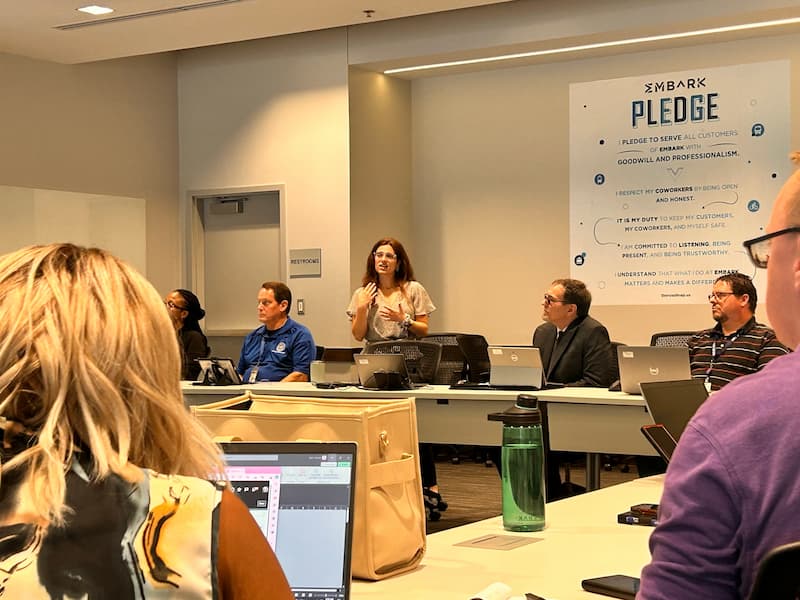
The idea of creating data governance and improving data-driven decision-making is incredibly overwhelming. What Works Cities gave us the framework and the goalposts early on to make data governance and data initiatives concrete in our minds and a little less daunting. There was this energy and an eagerness to activate around data, it just hadn’t happened yet. We found our early champions, people who are engaged in data practices but do not hold formal data roles, and really empowered them. We would come to the data governance board for feedback and to help us decide on a path forward. That helped keep people engaged and know that they had a stake in the game without the diffusion of responsibility that can sometimes lead to a plateau or disengagement over time. Truly, the way that we structured our data governance meetings was geared towards maintaining momentum. We wanted it to feel like you have your normal job and then you come to this group and it’s different and it’s fun and it’s energized.
What would surprise people about your city government?
One of the things I think people don’t understand about local government is that we have a hand in everything. Our mayor says, “You wake up and you wash your hands and brush your teeth and that is the city working. You put your trash out and that’s the city. You drive to work, and that’s the city working.” For Oklahoma City specifically, we’re one of the largest cities in the U.S. by landmass and the 20th largest city by population. We have 620 square miles, which means about 9,000 lane miles and 5,000 sewer miles. We just have a ton of infrastructure to maintain. So when we think of things like Pavement Condition Index, which is a standard data measurement for streets, we’ve worked hard over the last decade to get our average PCI score up to 70 which is considered “good condition”, and is notable because of how many land miles we have. Our growth in the quality of our streets is because we’re using data wisely.
What’s next for your work—and how do you hope to keep using data?
Our next focus is open data, transparency and engaging with residents. We want our community to understand the data that the city has available and what value that can bring to them, as well as how they can inform our data practices and collaborate with us. We also are hosting two Olympic events for LA 28. With the Olympics will come hundreds of thousands of visitors, the need for athlete security, and the need to ensure the well-being of neighbors around the venue. That increased activity impacts every element of city operations. Right now we’re fleshing out the quantitative and qualitative measures that we want to start tracking our progress against to make sure that we hit the goals for the Olympics in OKC.
Where should people visit in Oklahoma City?
The First Americans Museum is a state-of-the-art museum about the history and experience of Indigenous communities in the country. We have 39 federally recognized tribes in our state. We get to learn a lot about the different histories and cultures of those tribes here.
