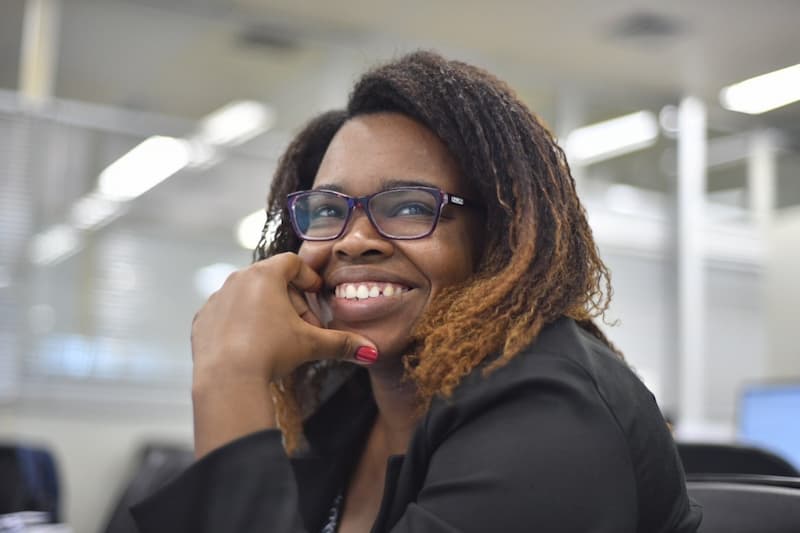
Data Champion
Raquel Flores
General Coordinator of the Projects and Goals Management Office (EGP-Rio)
Rio de Janeiro, Brazil

Why did you join city government? What keeps you going on tough days?
When I graduated from college, I didn’t want to work for the government in any capacity. My parents are federal civil servants and I always saw them working very hard in their fields and suffering a lot from changes in government. So, I started my career in the private sector. But the private sector was also a place where I felt a sense of exploitation, with long hours and without the return I expected. I turned to the public sector in search of stability. What I found in public service went far beyond that. I found real purpose. That motivated me to work harder, to seek more within my work. I bring my experiences from the private sector to the public service, so that we can be innovative and provide better services to citizens. I came in looking for something different, I found something much bigger and much more meaningful for my life.
What makes you most proud when you think of your city’s use of data?
I feel most proud when I think about the data practices in Rio. I think it’s largely due to this transformation of the internal culture, our ability to bring this high-performance management into the departments. It’s a huge effort and has brought about significant changes in the way we implement public policy. In addition to working with the data, we have indicators defined and do periodic monitoring on projects. We also have annual goals for each of the agencies so that by the end of the administration we can achieve the objectives that were defined. There is commitment from senior management that ensures that all departments are engaged. I think that makes all the difference, and helps the system work like a well-oiled machine to achieve results. And I think that’s what makes me most proud: The system working like a well-oiled machine, each person like a small cog contributing to helping us achieve greater synergy.
How did data help you solve a specific problem in your city?
One example is a new project in the Civil House of the City of Rio, called the Technological Zoning Project, which uses our existing traffic cameras to detect planning and security issues, like maintenance, trash, vandalism or petty crime, even before citizens file complaints. By concentrating City Hall teams and municipal guards in priority areas, we aim to reduce these problems and lessen crime hotspots across the city. Another example is Early Childhood in Rio Project, which looks at children from pregnancy to age six in an integrated way, across health, education and social assistance. We are building a unified system so these departments can share data, track whether children are enrolled in school or up to date on vaccinations, and take a cross-cutting approach so that we can achieve better results than if we were looking at each department’s responsibilities individually.
What lessons have you learned that other city leaders might find helpful?
To build a data culture, you need leadership support but also staff who monitor how the city is achieving its goals. As management analysts for projects and goals, we are basically the guardians of the strategic plan. We build projects together with policy specialists, defining the indicators and goals together. Having dedicated city staff building this bridge between senior management and the agencies, which is guarding this strategic plan, guarding this system, is very important. I think that this connecting link, what unites all of this are the AGPMs, is to have this management analyst position continue through administrations, keeping this system alive throughout all the changes that happen in the city government.
What would surprise people about your city government?
I believe that, in general, people have a very poor view of public service in Brazil. We have challenges, especially in large cities, where we are dealing with millions of people and significant inequalities. But I think what is not so clear which surprises people is the technical capacity that we have within the Rio City Hall. We have been holding public hearings to present the strategic plan to the population. The representatives of the departments are available to listen to questions, and concerns from the population and respond to them on-the-spot. Even when city staff don’t have the answers at the moment, they take the resident’s contact information and get them the answer.
What’s next for your work — and how do you hope to keep using data?
Within the project management office, I believe that we will be able to carry out more robust monitoring and analysis on cross-department projects once we manage to integrate the databases. We have data scattered across various departments. We need to go to the agencies and seek the evidence and information they have. Since Certification, we are doing more documentation of this work, making manuals available and providing more transparency to our processes.
What did achieving What Works Cities Certification mean to you and your city?
I think that the biggest difference that Certification makes is to show that we are on the right track and that we are basing our work on international best practices. We can see that this work with data yields results.
Where should people visit in Rio de Janeiro?
Praça Mauá. About 10 or 15 years ago, it was a very dirty area in the city center, almost inhospitable. It wasn’t an area where you could walk around comfortably. This area has undergone a total revitalization. It has culture and museums, you can see Guanabara Bay, you can see the Rio and Niterói Bridge, you can watch a beautiful sunset. It represents the transformation that Rio de Janeiro has been undergoing in recent years.
