
Data Champion
Trever Stoll
Civic Innovation Specialist
City of Pittsburgh, Pennsylvania, USA
Why did you join city government?
I always credit being at a happy hour and being social with finding this position. I graduated college in 2018 and was job hunting, so a friend of mine dragged me to a professional happy hour to discuss a fellowship I was interested in. I met the man who would later become my manager. I applied for an internship, ended up on the project management team and worked for a year and a half on various projects. My background is in civil environmental engineering as well as environmental science, so I eventually found a full-time position as a civic innovation specialist, which has been my current role since 2020.
What keeps you going on tough days?
All of this work is for the betterment of our residents, our government and the place that we choose to live in. So it is nice to see some of the projects that I have worked on have an impact. These projects don’t always directly impact me, but when they do it is a nice full circle moment. I get a lot of personal drive from that. Even when I am swamped with work or think “this is too much” I remind myself that someone has to do the job. A lot of my educational background is in environmental work, so I also take pride in being the person in the room to recommend we consult the Office of Sustainability and Resilience or consider the sustainability aspect of all projects that I work on.
What makes you most proud when you think of your city’s use of data?
Pittsburgh is very intentional about gathering data from multiple departments. We are constantly collecting data. After we clean the data, it gets pushed to the Western Pennsylvania Regional Data Center which is an organization accessible to residents, researchers, students and government. We are also in the process of launching our 2050 comprehensive plan for the City of Pittsburgh. For instance, when speaking with our sustainability and resilience staff, they work on data tracking for waste generation, air quality, tree canopy and more. We then ask residents: “How are you experiencing these effects?” That data from residents is baked into the plan, which includes environmental, mobility, digital equity data and more. This 2050 plan is going to be the future for the next 25 years and beyond. We want to make sure we get it right.
How did data help you solve a specific problem in your city?
Data heavily impacted our Safe Routes to Schools program. When my team looked at data on Pittsburgh’s youth and school routes, we found recurring incidents where residents felt unsafe walking to school or otherwise lacked access to routes (broken sidewalks, dangerous traffic crossings, etc.). We asked: How can we ensure residents have safe walking pathways or access to good public transit? We wanted both parents and children to feel comfortable walking to school. We leveraged existing data and collected new data to paint a full picture. Our teams took that data and leveraged it into a few programs like Safe Routes to Schools to improve school commutes. It was great to take the data we had, curate it, then leverage it to see if we could have an impact. And the data is currently showing that we are.
What lessons have you learned that other city leaders might find helpful?
Good data practices come from not just top-down or bottom-up approaches. It really is top-down, bottom-up, meet in the middle and also drill directly into that middle. Leadership may not have the same hands-on tasks as their staff, but they still leverage data to communicate and affirm the mayor’s leadership achievements. They leverage data generated from across City Hall to make informed decisions, because the people at the top already want good, legible data. Staff who often generate data might not fully understand the final product they are looking for. So our data governance team has to try to transparently reconcile the needs of staff and leadership: What is this data being used for? Why is it an important situation? Leverage your mayor, but also your staff, managers and directors.
What would surprise people about your city government?
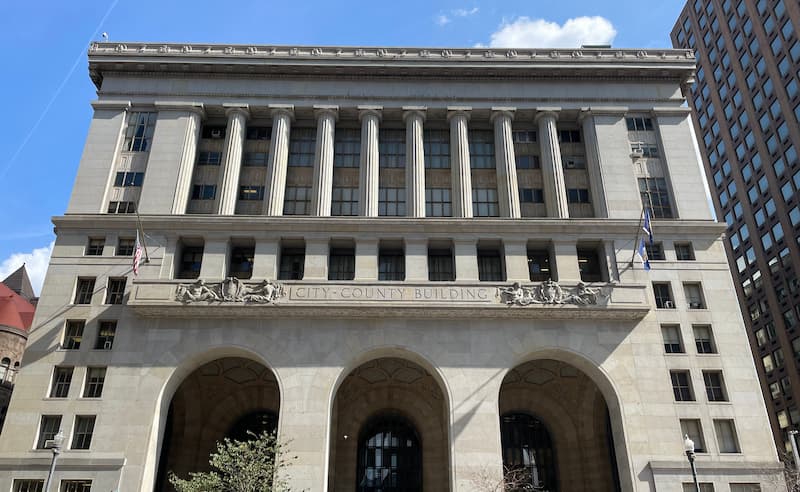
Pittsburgh’s government does not directly own our sewer/water, transit, and parking authorities. When Pittsburgh’s steel industry collapsed, the State of Pennsylvania stepped in, and we had to sell off a lot of our assets. So that has impacted our government structure to this day. With some infrastructure projects, residents often ask the city proper about plumbing or road issues, but we don’t have direct control over some of these entities. They are our partners. So they manage their assets, we manage our assets, and all try to collaborate to improve our residents’ infrastructure. A lot of people think it is all just housed in the city, but that’s not the case here in Pittsburgh. Although the Venn diagram overlaps sometimes and we have board members on some of these authorities, we are not a majority.
What’s next for your work—and how do you hope to keep using data?
We are sharpening our data tools and making that data more accessible. If you have good data you can make informed decisions from day one. I do not see our push for strong, accurate and clear data diminishing at all. We will probably double down on those efforts. We are particularly interested in our results-driven contracting and our procurement work as outlined by the What Works Cities’ criteria. We will also host the NFL draft next year, so the city is making a big push now to prepare our internal infrastructure for that. Our population will likely triple over the course of a weekend, and since I sit in the Department of Innovation and Performance, I experience directly the need our department has to continue managing large IT infrastructure projects for the city in addition to the preparation. We want to achieve Platinum What Works Cities Certification too.
What did achieving Certification mean to you and your city?
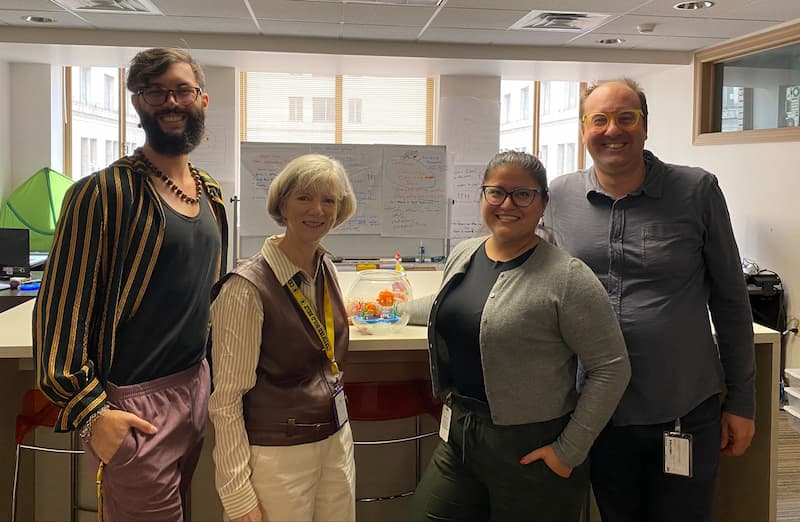
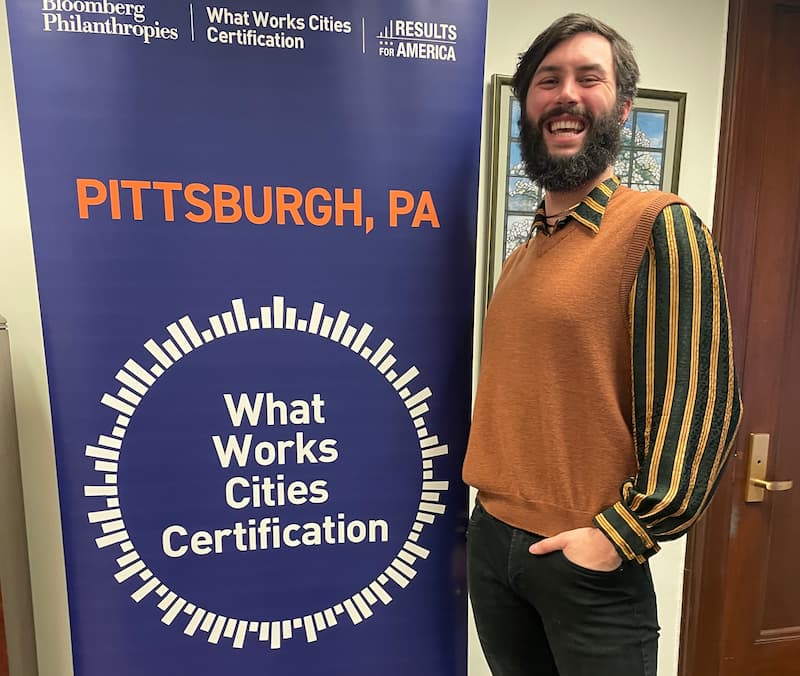
It was a win for the team. Certification isn’t something you achieve as an individual or even as a single department, it takes multiple departments working together, as well as support from the council. Our city is growing; we still have a small-town feel, but we’re expanding at a pace that requires big-city processes, including how we manage our data. Certification helped us move forward, improving our policies, dashboards and data sources. Departments are constantly finding ways to improve, and Certification really pushed us further into the future than we expected. I can’t stress enough that none of this was done by me or any one person alone—it was truly a team effort. The City’s progress comes from great employees coming together across departments.
Where should people visit in Pittsburgh?
You have to check out the views on Mount Washington. You get these beautiful sweeping views of all of downtown and our historic Hill District. You get to see almost all of Pittsburgh as a whole in a single glance.
