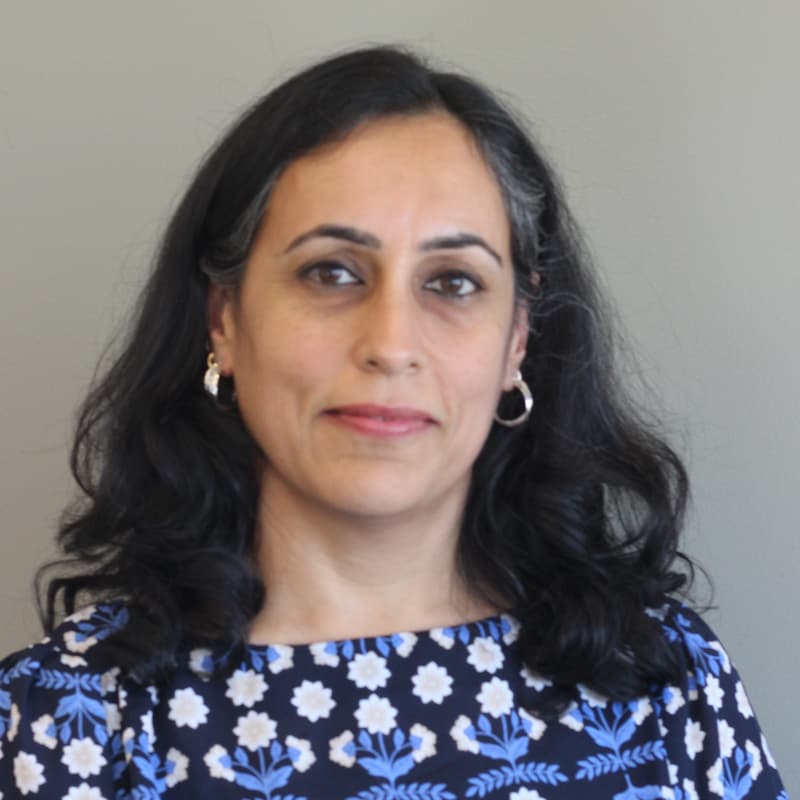
Data Champion
Arti Tangri
Enterprise Technology Manager
City of San José, California, USA
I’ve evolved from being a very technical person to maintaining that bridge between the technology and the business needs for the city government.
If we can standardize some data collection processes, we can get quality data at the source.
Why did you join city government?
I started working for the City in 2016. I worked for high-tech companies in the past, and my interest was purely technology at that point in my life. Over the last nine years that I worked for the City, this has been the most rewarding job that I’ve ever had. There hasn’t been a single year which has been the same as the previous year. I’ve evolved from being a very technical person to maintaining that bridge between the technology and the business needs for the city government. I really enjoy that leverage that I bring coming from a tech sector and learning the complications that come with making government work and being able to contribute to that side of the world. That’s extremely rewarding to me, and that’s motivated me to stay.
What makes you most proud when you think of your city’s use of data?
There are so many different departments that use data quite extensively, but I’ve seen it most closely in 311. We’ve been trying to establish 311 as an omnichannel for all resident-facing interfaces with the city. During the pandemic, I was embedded into the 311 team and we established processes that we’ve used as a model for the rest of the city. Our Transportation Department is also highly advanced in terms of their use of data. They work with really cutting-edge data, including IoT devices and large volumes of data. At the same time, the Department is resident-facing and has to balance that with its unique technical challenges. We’re now working with Transportation to upgrade their technology and present their advanced data use to other city departments so they can leverage it too.
How did data help you solve a specific problem in your city?
Back in 2020, we did an analysis on 311 data. We found that there were a huge number of reports under the catch-all “Other Issues” category that residents are reporting on, and we didn’t know what was going on there. We engaged with the data scientists, external partners to help us figure out what’s going on in that large category. They did textual analysis to give us top topics that people were reporting on. That was an eye opener. For example, abandoned vehicles service requests would go to one place. But our analysis found that abandoned vehicles are not just a transportation issue, they could be a housing-related issue or it could be an issue with people leaving trash outside their lived-in vehicles that needs to be picked up. That led us to redesign the abandoned vehicles service type. We renamed the category to “Vehicle Concerns” and now those requests branch into different departments depending on what the resident needs.
What lessons have you learned that other city leaders might find helpful?
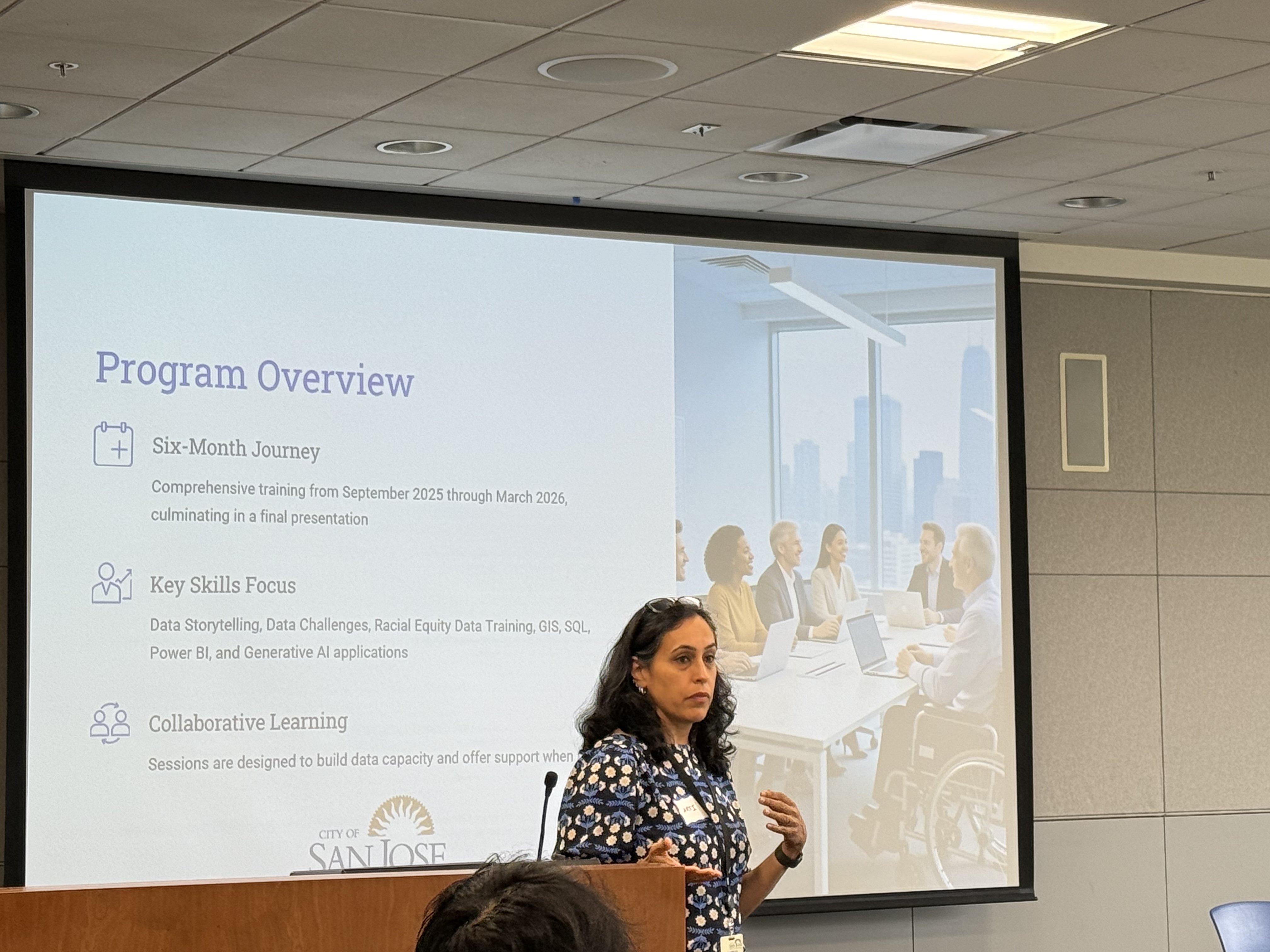
We’re kicking off year three of our staff training program. There are so many different people in the city who are working with data day in, day out, but they rely on technical staff for data analysis. If we can upskill our staff to use data, upskill them with tools and technology that they can leverage with data that they have at hand, I think it can be really powerful. Everybody asks, “What does the data tell you?” But does everybody have the right tools and skill sets to be able to find and extract information out of that data? Not everybody does. With generative AI, with all the different tools that we have at our fingertips now, it’s becoming a lot easier, but we need to be cautious on how we use those tools. We are trying to maintain that balance by training them, but also making them aware of the limitations and the challenges that come with these tools.
What would surprise people about your city government?
When we publicly released our data strategy, there was a lot of positive feedback. The strategy that we put together with Bloomberg Philanthropies turned out to be a beautiful document, a beautiful pathway for us to follow to be successful in our data journey. We got really good feedback from residents, and it was surprising to me that a document that is so internal-focused would interest residents. I think people usually associate government with bureaucracy, so I think it comes as a surprise when residents see so much thought that’s gone into data policies.
What’s next for your work?
This year, we launched our data strategy and released our data governance policy, and they go hand-in-hand to establish data governance. We have working groups going for infrastructure, data analytics, data literacy, and data standards. Between these groups, we are trying to maintain that balance where we can get good quality data in the city that we have faith in. Data standards itself is such a huge area that we started talking about it and we were like, “Where do we start?” Through different experiences working with departments, I feel like if we can standardize some data collection processes, we can get quality data at the source. We are trying to establish data collection frameworks to guide departments on technology procurement, vendor contracts and surveys. We might have some processes in place in the next few months, but we will probably see impact in about a year.
What did achieving What Works Cities Certification mean to you and your city?
It gives us a benchmark to work with. We looked at other organizations to see if there’s anything else to benchmark ourselves on how we use data, but What Works Cities really stood out. It has everything covered. It’s a good overall view of how you could use data from different perspectives. It’s a good way for the city to just keep itself on track in terms of using data.
Where should people visit in San José?
Santana Row is a very happening place. There’s nightlife and activities on the weekends. It’s a really good place to spend some time.
