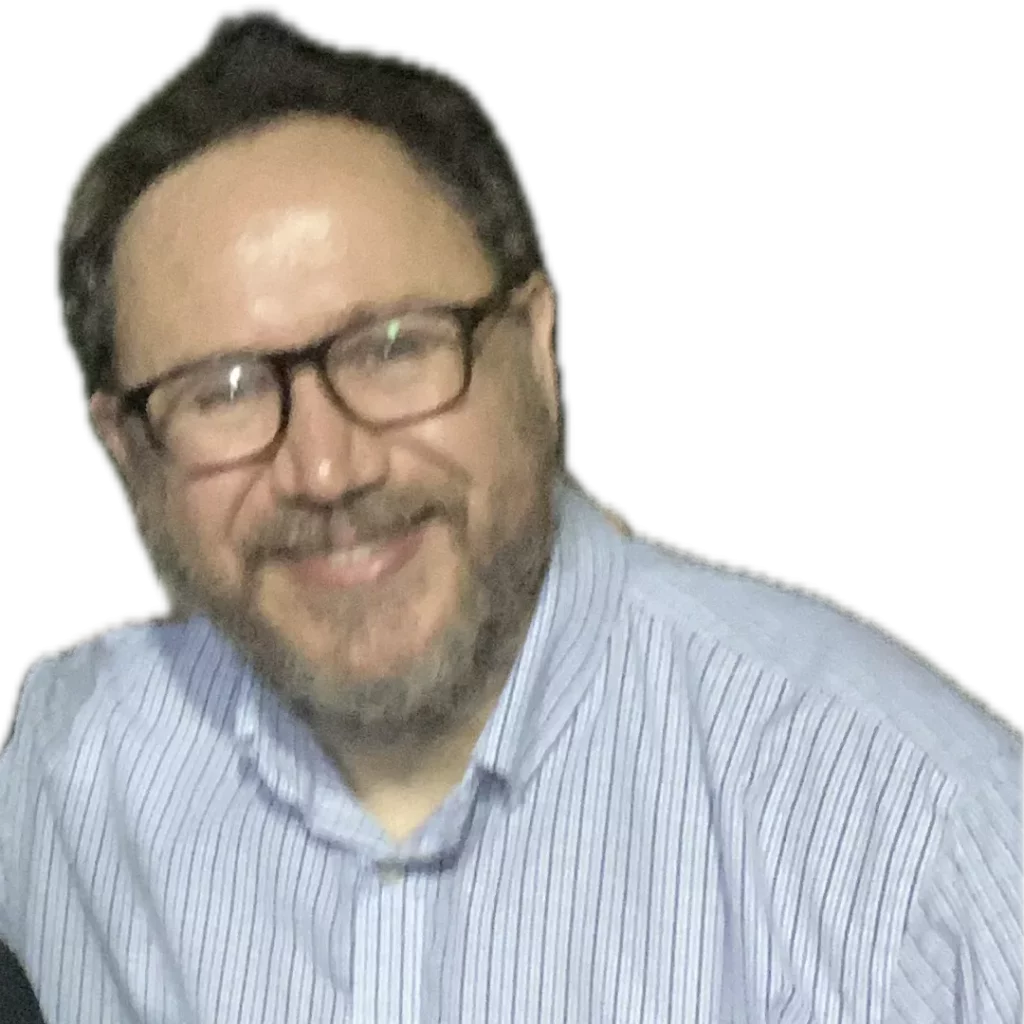
2026 Data Champion
Pablo Leon
Director
The Municipal Planning Secretariat (SECPLAN)
San Fernando, Chile
Why did you join your city government?
I joined the local government from an invitation from the mayor to be part of his municipal administration once he won the election and took office, so that we could carry out his management plan. What motivates me to move forward is the strong commitment I have to the community, where I was born and raised, which I had already served for many years before migrating to Mexico and then returning in 2019, to address everyday problems responsibly and to make sure that the policies and programs currently being designed really succeed in generating public value for residents.
When you think of your city’s successful use of data, what are you most proud of?
I attribute our success largely to the effort we made to convince both the mayor and other officials about the benefits of making data‑based decisions, which gives much greater certainty when it comes to making trade‑offs and allocating resources. I didn’t feel alone in this, I’ve felt supported in all the effort that’s been made to persuade people and to implement many platforms in different departments, dashboards, for example, that have allowed directors and managers to better understand their areas and the functions they perform. In that way, they’ve also allowed us, as directors, to better monitor and follow up in a timely fashion on the performance of the other departments and units. I feel proud of all the effort that has been made, and that this effort has borne fruit.
Describe a specific problem you were trying to solve in your city. How did data guide your work and decision-making?
In my area of expertise, which is finance, we’ve solved mainly the structural issue of strategic alignment. Strategic alignment becomes a critical objective for any administration, because what we do is, first, help directors and managers define their strategic objectives using a Balanced Scorecard methodology. From there, a project portfolio is generated that requires budgets, and those budgets are tracked with a set of KPIs, which allows us not only to ensure alignment, but also to verify the degree to which the objectives we set are being met. So, in the strategic element, we had specific problems that we’ve been solving, and data has guided the work, especially around monitoring the performance of the actions carried out.
What lessons have you learned that other city leaders might find helpful?
Have a clear roadmap backed by the administration, the mayor’s office, and the other directors. That roadmap has to be followed consistently, with periodic monitoring, in order to quickly adjust any misalignment or gaps that may arise between the budget and what is actually being carried out so any deviations can be corrected at an early stage. That’s one recommendation I’d make to other leaders: always have a roadmap, follow it and adapt it according to the circumstances that arise.
What did achieving What Works Cities Certification mean to you and your city?
Achieving What Works Cities Certification validates the community‑driven effort that has been made in a mid‑sized city in Chile. It reflects our goal of being very responsible when designing local public policies, which must always generate public value for residents and use resources efficiently. Moreover, our use of resources must be communicated to society through the open data platform, to guarantee accountability and transparency. Participating in What Works Cities has been an outstanding opportunity to insert ourselves into this global community, to learn about success stories from other municipalities, and, in turn, to showcase our own success stories so they can be adapted to others’ needs.
What’s next for your work—and how do you hope to keep using data?
We’re at the stage of building awareness of how useful these dashboard and visualization platforms are. Next, we probably need more targeted training on the importance of correctly using statistical tools, both descriptive and inferential, so that we can make better projections and more precise forecasts with stronger methodological rigor. I think that would be the next step: continuing to build the workforce’s capacity by training public servants in statistics, data science and artificial intelligence so that they can improve the accuracy of our projections.
Where should people visit in San Fernando?
I’d recommend visiting the parks, which are well maintained, with lots of green areas and facilities, and the municipal stadium, where there are games and you can enjoy food. Also the Plaza de Armas, which is a large, spacious square with trees of different species and ages, and a small fountain in the center of an old pool that gives the square a very distinctive look. Of course, the vineyards, because San Fernando is also a gateway to the wine region here in Chile.