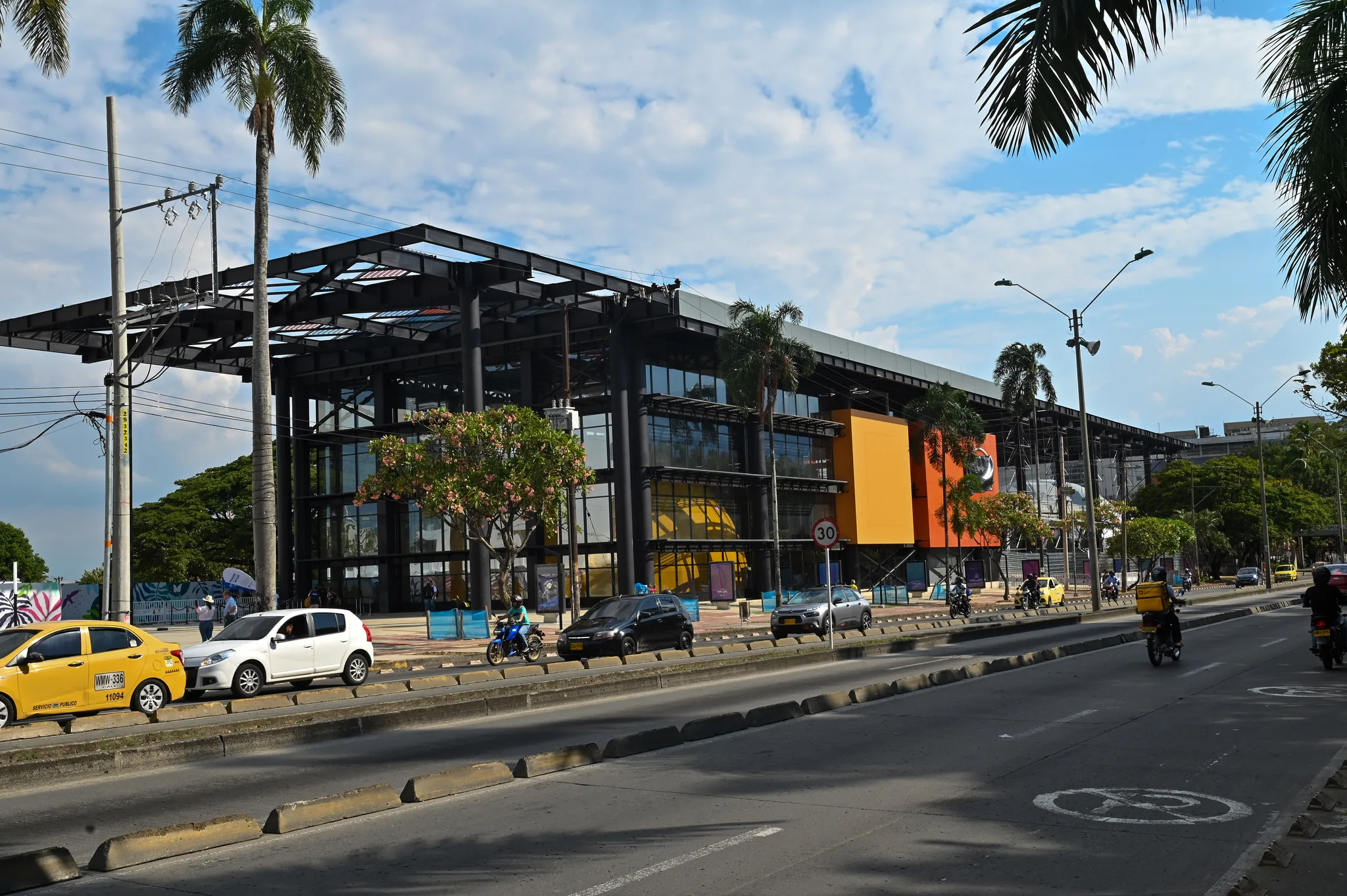
Santiago de Cali, Colombia
Transforming Smart Data Into Safer Communities
Project Type:
Public Safety, Community Engagement, Technology

At a Glance
In 2024, Santiago de Cali’s homicide rate was 40.9 per 100,000 inhabitants, its lowest level in 40 years.
The percentage of residents who said they felt safe in their neighborhood increased from 45% to 57% between 2023 and 2024.
Won first place in the LATAM Smart City Awards 2023 in the ‘Digital Government’ category and in the ‘Best Country in Digital Transformation’ category.
33 technology centers spread throughout the city are helping to bridge the digital divide, offering training and access to technology.
Data can help reduce violence. This is a key takeaway from Santiago de Cali, Colombia, where the homicide rate has been steadily declining for years.
In the 1990s and 2000s, this city of 2.8 million inhabitants, located in southwestern Colombia, had one of the highest homicide rates in Latin America, due to drug cartel activity, high unemployment rates, and the widespread availability of firearms, among other factors.
The transformation in Santiago de Cali has been driven by reliable data. In particular, the Security Observatory, part of the District Secretariat of Security and Justice, has been central to Santiago de Cali’s data-driven strategy to reduce violence. It collects a range of indicators that go beyond crime itself, in order to understand the socioeconomic determinants of violence.
The goal is to move beyond simply knowing where and when violence occurred and who it affected. The Observatory aims to help city officials understand why crimes occurred so they can design an effective violence prevention strategy and make data-driven decisions.
The Observatory team conducts comprehensive analyses using quantitative, qualitative, and spatial data, producing weekly, monthly, and annual reports that detail the dynamics of violence across the city. These reports are shared among different agencies within the District Administration and are made publicly available.
The city translates these findings into concrete actions, focusing on the 10 neighborhoods with the highest homicide rates in Santiago de Cali, which together accounted for 40% of the city’s homicides in 2024. In these areas, authorities measure various indicators such as unemployment, education levels, and disease rates. They then design targeted interventions for these “micro-territories” and evaluate their effectiveness.
“The data not only allows us to see which areas are most affected by violence or are vulnerable to it, but it also helps us decide how to work with the police and make the necessary social investments. Data is crucial for understanding how to allocate public security forces and other resources.”
For example, the city improved street lighting in a neighborhood prone to violence and then tracked whether homicides decreased in the following months. In another area, it offered job training programs focused on vulnerable residents and then assessed whether employment and other well-being indicators improved while violence decreased.
In a way, Santiago de Cali is conducting data-driven experiments to identify the most relevant variables in a specific area that should be addressed to reduce violence.
In 2024, Santiago de Cali recorded the lowest number of homicides in 31 years: 8% fewer than in 2023 and 10% fewer than the city’s average for the 2020-2023 period. The decrease in the city’s homicide rate suggests that Santiago de Cali’s data-driven approach is working.

“In Santiago de Cali, we are seeking data-driven solutions to reduce violence. In the areas most prone to violence, we are implementing targeted interventions while monitoring crime, as well as employment and other well-being metrics to see what drives change.”