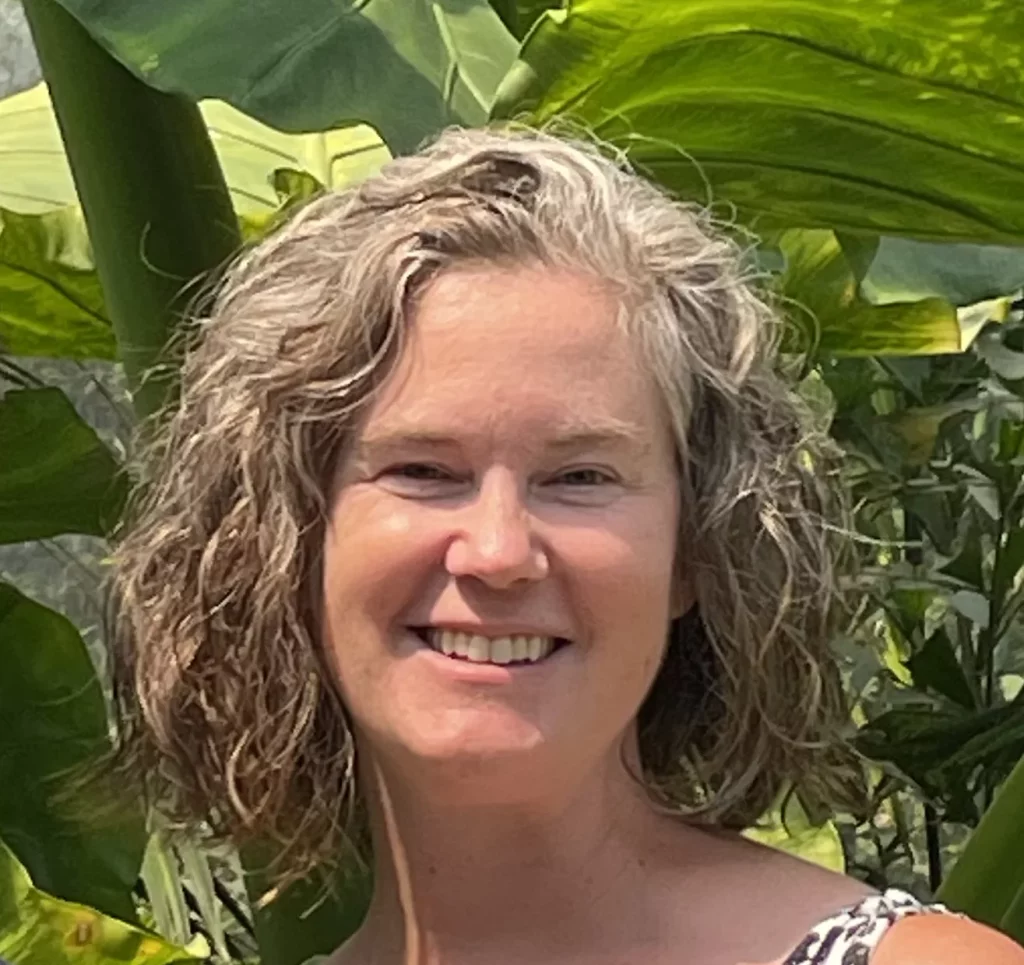
2026 Data Champion
Dr. Jennifer Bodnarchuk
Acting Coordinator
Data & Analytics, Innovation & Technology
Winnipeg, Canada
I don’t think we ever could have imagined that our work could possibly turn into this. So that’s my advice to other cities: Just start where you are, start small and keep going.
Why did you join your city government?
I worked for a government-owned business for about 12 years before I started with city government, and I felt like I knew everything about that business’s sales and products. So when I saw the posting for the job at the city, I was so excited to get to learn about and analyze new data sets. I thought it was a really great next step in my data career. Now fast forward seven years, I have expanded my passion beyond just the data analysis and into the data management and data governance pieces. I dragged my heels a bit to accept that these were foundational pieces of data work, but now that I’ve been doing it for a few years, it’s the piece that keeps me coming back because I know that that is what’s needed. Data management and data governance is what’s needed to make the analysis better.
When you think of your city’s successful use of data, what are you most proud of?
I am proud that Winnipeg uses data in so many ways. It’s actually hard to count them all. Some of my favorites: we map geographic areas of higher poverty within the city; we track and report the progress of the snow clearing and the spring cleanup activities of our public works department; we count mosquitoes in 28 different locations around the city; we have monthly reports showing permit activity and values and projects; we measure live 311 wait times and live river levels; we have nearly 300 open data sets at the city. There are so many more examples, that’s what I’m most proud of about our data work in Winnipeg.
Describe a specific problem you were trying to solve in your city. How did data guide your work and decision-making?
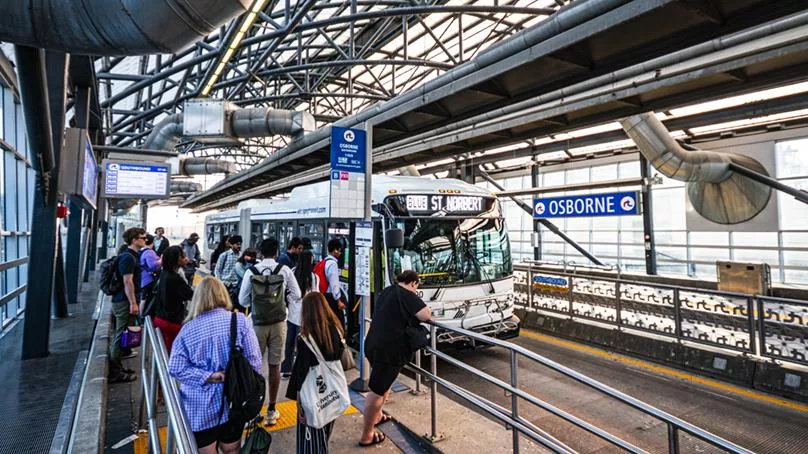
Winnipeg’s transit routes hadn’t changed for decades, and small tweaks here and there were not going to be enough. In June 2025, Winnipeg overhauled the entire transit network. Every bus route changed all in one day. There was a ton of data used leading up to this change, from the existing network, and public engagement consultations. They had data from cell phones to see where people were traveling, whether they were on a bus or not. Winnipeg Transit also talked to the bus drivers as subject matter experts because, of course, they knew a lot about the transit network in the city. Once the routes changed, the data collection didn’t stop. Transit said, “Please give us feedback. Are the new routes working? Are they not working? What changes do you want?” They got a ton of feedback, lots of it negative. You can’t please everyone when you work in city governments, but they’ve been taking this feedback and using it to continue to improve the network. Change is slow, but it does happen. I know this personally because I was one of the people. I was a data point — I phoned in my suggestion of how my bus route should change, and it was one of the recent changes. I think Transit is doing a really good job of using data and public input to improve services.
What lessons have you learned that other city leaders might find helpful?
My favorite example from Winnipeg is that you can start small. The prime example is our information governance committee. Several years ago, one other colleague and I took a What Works Cities course on data governance together. We did our homework in the course. We wrote up the draft documents, then we shared it with a few people. We had discussions. We improved the documents. We shared it with a few more people, and this effort just kept growing and snowballing. Fast forward these past years, and Winnipeg now has an information governance committee. We meet monthly and about 10 to 15 people show up every month. We have great discussions about data management, data governance topics, what our plan is and what we can do next. When my colleague and I were taking this course, I don’t think we ever could have imagined that our little work could possibly turn into this. So that’s my advice to other cities: Just start where you are, start small and keep going.
What did achieving What Works Cities Certification mean to you and your city?
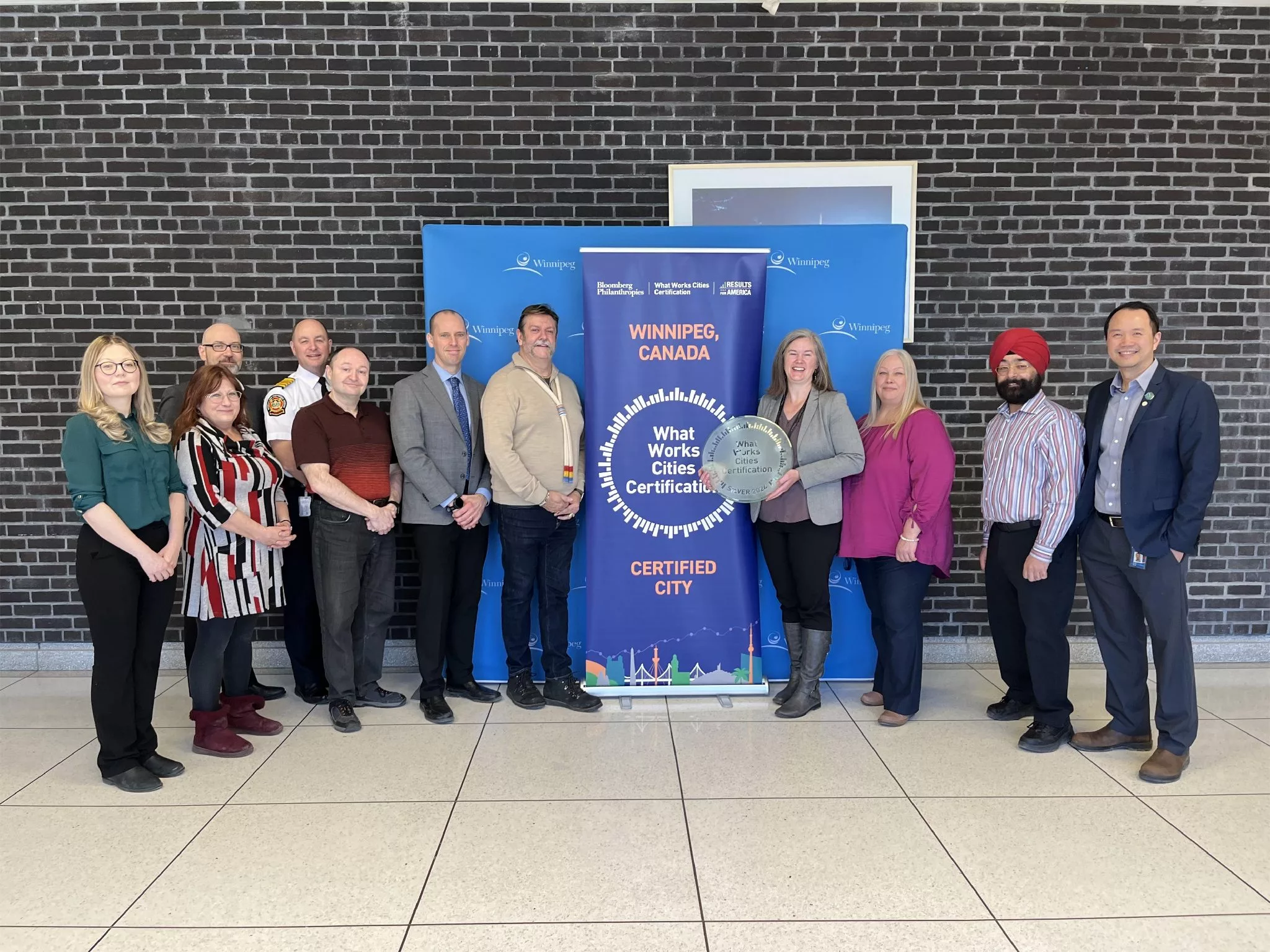
For me personally, achieving What Works Cities Certification was a huge accomplishment. Winnipeg submitted its first application for Certification in the first few months that I started, so I got to contribute on a few of the criteria. From that initial glimpse, I just knew immediately this was valuable. This was something quality that the City should really pursue, and so I signed up for my account. I took every What Works Cities course that I could, and I tried to convince as many colleagues as I could to come take these courses with me, and just kept advocating. After a few years, when I was asked if I wanted to lead our second Certification Assessment, I said, “Of course I want to do this.” It took a third Certification Assessment before we achieved Certification. I was so excited to get the Certification, and for the city as a whole, Certification shows that our data practices are improving and maturing over time, and I think the community of people that we have within the city is expanding and learning. The What Works Cities program is really valuable: the guidance helps us focus our efforts where they’re best suited to make the most difference.
What’s next for your work—and how do you hope to keep using data?
For Winnipeg, our data work is so broad and even my role is quite broad, so I really like the term data champion, because I think that really describes it. For me personally, I’m going to continue to advocate for using data, managing data and governing data in every conversation I have at the city. I think people who know me here in the city know, like, “Oh, Jen’s going to say something about data.” It’s a role that I think fits well. We’ll continue to promote adding new open data sets to the open data portal and building more applications that use open data. I’m working right now with members of the purchasing department and the legal department to improve our results-driven contracting. As we improve our data practices, we’ll also earn more What Works Cities Certification criteria. We’re on our journey, aiming for Gold Certification. I’m also working with community partners to increase the use of open data to provide data literacy and access to residents and community partners. I’m always trying to find ways to engage students. There is a growing data community in the whole city of Winnipeg, not just the City administration and there’s lots of interest.
Where should people visit in Winnipeg?
I always recommend the Forks, where our two rivers meet. We have the Red River and the Assiniboine River. The Forks has been a meeting place for over 6,000 years, so it’s an amazing place. It has something for everyone. There’s history, art, food, drinks, shopping and nature. It’s so welcoming, I just love going there.