2026 Data Champion
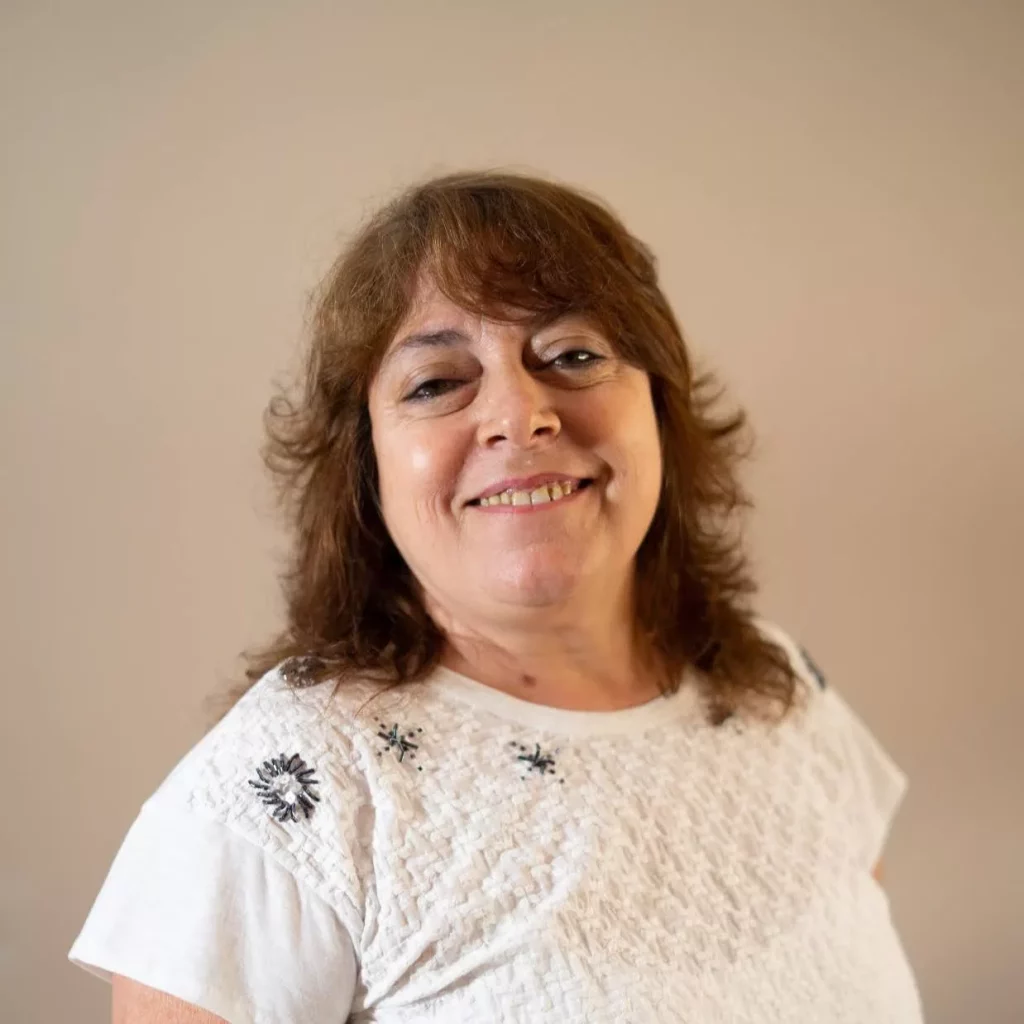
Marianela Piazzano
Secretary of Coordination for Management and Strategic Planning
Jesús María, Argentina
Data governance and data use are here to stay…this foundation will make things easier for those who come after us.
Why did you join your city government?
My interest in public service arose from a call to join a municipal management team in 2019. Coming from a background in science and education, I saw this as a wonderful opportunity to contribute to my city. At the same time, it presented a challenge—not only because it was an entirely new world to explore, but also because the chance to truly understand the city’s needs makes you realize what managing it entails and what it means to work for residents during difficult times. Daily life can be very complex and demands immediate responses. Working in local government is the best way to effect change from the ground up.
At times, within other levels of government or political organizations, change can seem more difficult or distant, and resources never seem sufficient. However, our entire leadership team is convinced that, with order, transparency, and determination, we can achieve our goals. We have an excellent team and a leader—Mayor Federico Zárate—who motivates, supports, backs and values us; I believe this fosters the confidence needed to make decisions.
When you think of your city’s successful use of data, what are you most proud of?
Starting in 2023, the Mayor made the decision to prioritize working with data. That was a truly significant undertaking because we needed to begin working on institutional culture. Governing with data provided us with a solid foundation so that the decisions we could make wouldn’t be improvised, but rather aligned with our management plan and the goals we had set. It wasn’t easy; we had to begin a whole process of organization, diagnosis and building an in-depth understanding of how different areas worked. We approached each team from a learning perspective, understanding what it meant to use data and ensuring that it wasn’t just about numbers or results, but that the analyses could be transformed into concrete decisions. Because ultimately, what we want is to have efficient answers.
Describe a specific problem you were trying to solve in your city. How did data guide your work and decision-making?
One of the areas where we began our data‑driven work was the health sector. Specifically, we had two primary healthcare centers that were geographically very close to each other. We started to do a detailed analysis of the number of visits, the types of visits and the investment involved in maintaining both places. Being able to analyze that data allowed us to consolidate those centers while still providing the necessary services. We had to extend some hours, but we were able to greatly optimize staffing, and today we can monitor how that decision strengthened operations. It was also fundamental to be able to work with the residents on this change because when services change, there is obviously sometimes resistance.
Another example is that we are about to launch a new regional transit hub. We have been collecting vehicle‑count data, which has allowed us to understand the dynamics of urban mobility and make decisions on road systematization. It has been an excellent experience for the teams because taking part in those data collection and analysis processes is a professionalization that teams value—and it gives us peace of mind regarding the decisions we make.
What lessons have you learned that other city leaders might find helpful?
I think the first lesson is to know the system in which you’re working. That means knowing our municipality, our city, our management teams. I talk about knowing the ecosystem: if we don’t know how that system works, decisions (and how effective they are) feel much more distant. It’s important to prioritize planning before acting. Even though responses and reactions must be immediate, every process, both operational and strategic, requires prior planning; it requires setting clear goals about where we are going.
The big challenge for local governments is that, in our case, we have four‑year terms. That can seem like a long time, but once you’re governing, each year goes by quickly and factors change. We also went through COVID, which forced us to reorient. If we hadn’t had prior planning, we probably would have been adrift. So aligning all planning processes with data governance processes is a fundamental learning. And the challenge is to get those strategies embedded in the teams so that we can continue working in the same way. It takes a lot of work, a lot of process and a lot of patience, but it’s the safest path.
What did achieving What Works Cities Certification mean to you and your city?
Our team says What Works Cities Certification marked a before and after. At first we didn’t know if we could achieve it, because it seemed too complex. But we studied and became very familiar with the criteria, the sub‑criteria and all the support we received from the What Works Cities team. It really was continuous, ongoing learning. The Certification was a lighthouse guiding us toward where we needed to go, and I think it greatly simplified a path that we had initially seen as too complex. For us, getting Certified meant putting Jesús María on the map beyond our region — being able to compare ourselves to, and work together with, other cities in the Americas, to learn from other cities’ experiences and replicate them, and at the same time to share what we are building. We are the smallest city that has obtained the Certification, and that truly fills us with pride because our working standards are aligned with major cities. We are truly convinced that going through the Certification was the best thing that could have happened to us, and we always try to encourage and share it with other cities, because it really is an experience that changes a government’s management forever. Before Certification, we had to explain everything we wanted to do or each process we wanted to implement; now other teams come to us saying, “I want to do that too, I want to review my indicators, I want to see the data I have, I want to design dashboards to track and monitor,” and that makes us very happy. You realize the seed has been planted and that it’s just a matter of continuing to nourish it so it can grow.
What’s next for your work—and how do you hope to keep using data?
We have been able to organize and clarify our goals, particularly through the Secretariat of Management Coordination and related to data governance. The challenge now is to combine new technological tools — artificial intelligence — into all of this. Working with AI has given us support that greatly speeds up our work processes, and teams have also found a new way of working, refreshing the skills of many people who work in different departments. It’s been very interesting to see the rediscovery of talents and values within the various teams: people who have been upskilling and turning into highly proactive teams. Data governance and data use are here to stay. We can’t go backwards. I think this foundation will also make things easier for those who come after us, so they don’t have to take steps backwards, but instead can build new initiatives from these decisions.
Where should people visit in Jesús María?
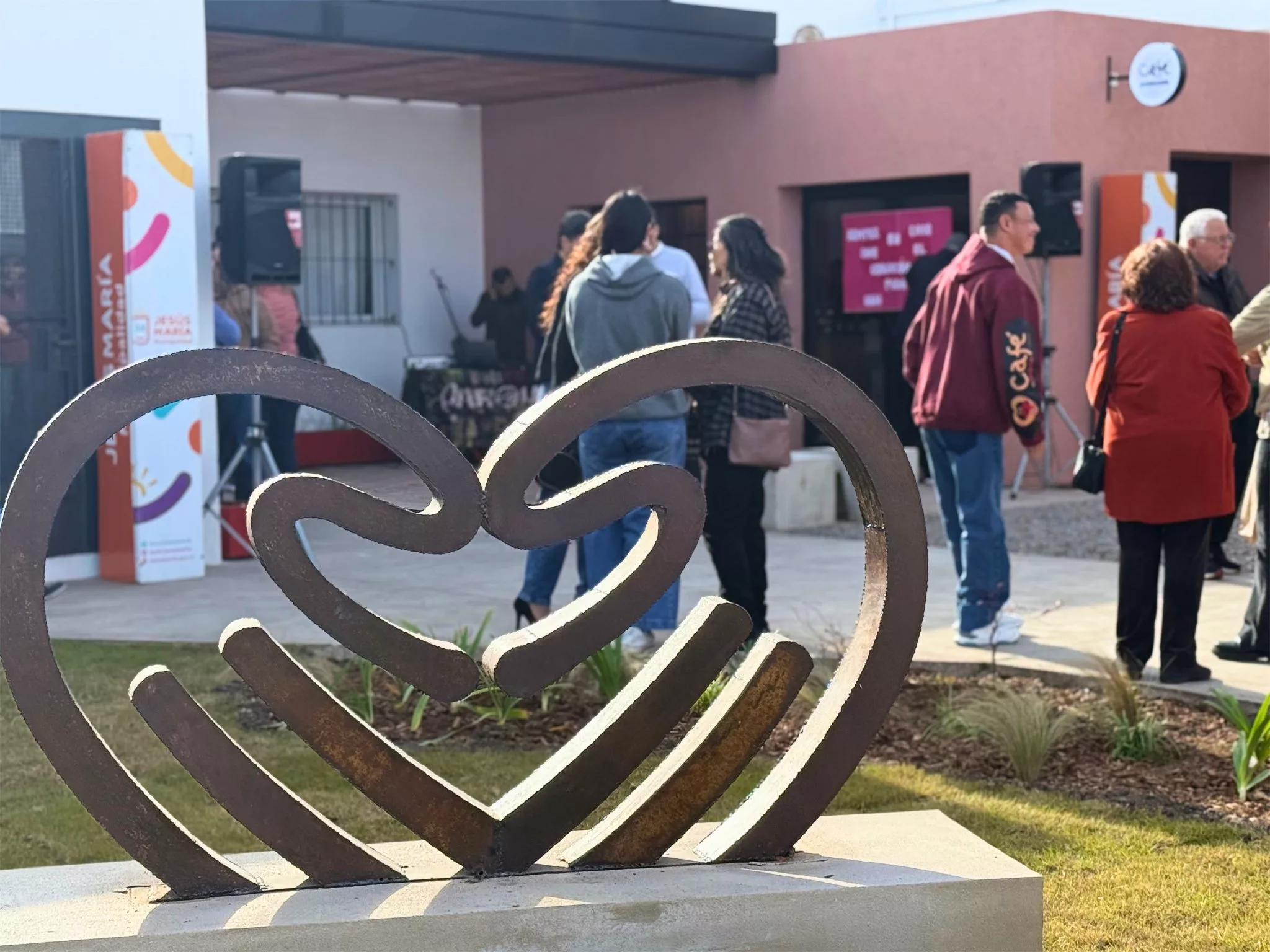
Jesús María is a cosmopolitan city. It’s a city of 40,000 inhabitants, with people who are extremely entrepreneurial and have a very special, supportive, collaborative spirit. We have a major event every January: the Jesús María Doma and Folklore Festival. It’s a festival coordinated by representatives of school cooperatives, because its goal is to raise funds for schools. We receive around 500,000 people at each festival. A social organization recently launched a project called Café al Corazón, where people with disabilities manage a café and have the opportunity to work and develop their future life paths. Another thing I can’t forget is that we really like to eat asado, one of Argentina’s typical dishes, and we say that in Jesús María we have the best asado in the world. Surely that is another great excuse to visit us.