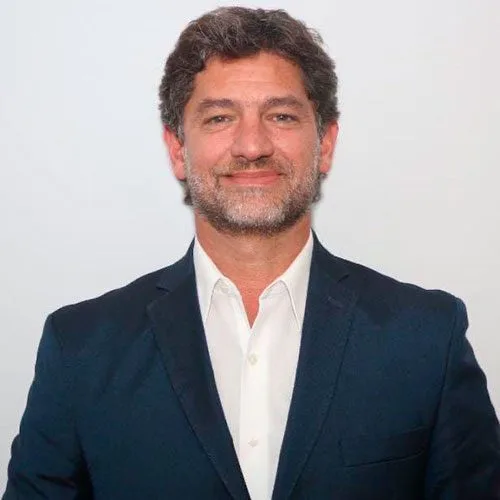
Data Champion
Matias Meric
Chief of Staff
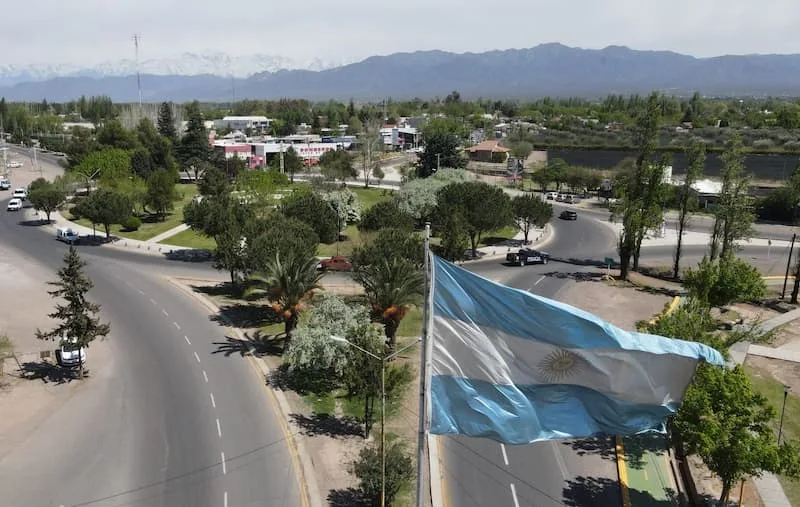
Luján de Cuyo, Argentina
Start and keep going, consistently, with small wins that have impact—that become replicable, scalable and contagious.
Data and smart decisions are essential, but what gives me the most satisfaction is seeing real, face-to-face transformations in people’s lives.
Why did you join city government?
I come from a private sector background, with a career spanning multiple industries. I fell in love with Luján de Cuyo when I ran an energy company based here. After 15 years at a multinational corporation, I needed a change. I took a sabbatical that ended up being longer than I expected. When I joined public service in December 2019, I thought it would be another kind of sabbatical, but it became much more and what I thought would be one year turned into another, and another.
What keeps you going on tough days?
How do I stay motivated? I was lucky to find a group of people and political leaders convinced that they truly wanted to transform their community. I’m a firm believer in data-driven management, not as a slogan, but for its real impact on people’s lives. And working alongside a team as passionate and committed as I am makes me come to work every morning with the belief that we have to transform something, no matter how small.
What makes you most proud when you think of your city’s use of data?
In the private sector, I depended on good data to make good decisions and deliver results. I wanted the same here, and there was an even greater responsibility because this was about neighbors and citizens. And in the public sector, that data and evidence culture wasn’t there. The pandemic made this clear. We had to digitize quickly to keep the municipality running, but more importantly, we had to change the culture of how public affairs were managed and how decisions were made. At first, management was scattered and not convinced of the value of data. We had to chase them for a year to put together a simple one-year plan and budget. Now they come to us constantly asking for data and dashboards. Every area has a data champion, every area has a digital transformation lead, and together they coordinate to generate better-quality data, faster. That makes me very proud because something shifted. It’s no longer about pushing and convincing; now they want to be part of it.
How did data help you solve a specific problem in your city?
One example is potable water micro-metering. Mendoza is an oasis in a desert, so water is very scarce. Recent studies show that by 2050, the supply of potable water from the high mountains will decrease by 50%. We used data to optimize production and distribution, but the most interesting part is at the household level. We didn’t know actual household consumption or how much was lost in the networks. So we launched a micro-metering program and have installed 10,000 meters so far, which covers 25% of users. This allowed us to identify behaviors and patterns in both consumption and network losses, and change our strategy. Customers also now receive real-time information through WhatsApp via an AI bot on their current consumption, projected bills and alerts about possible leaks. The result was a 35% reduction in system consumption.
What lessons have you learned that other city leaders might find helpful?
- Political leadership is fundamental. If there isn’t leadership buy-in it won’t work. I had mixed levels of support at times and thought I could be a hero and do it alone. In reality you need the entire organization involved.
- Empower and support the leaders within the organization, regardless of rank. Invest in training to drive cultural change and show why data is good, why data lets you make better decisions, which lead to better community impact and, therefore, give you greater job satisfaction.
- Have a clear North Star. To make your city the best place to live, you need a solid plan with goals, objectives and indicators of what you want to achieve.
- Involve the community. It’s important to understand that successful projects will not be designed by 15 or 20 enlightened people who “know” what neighbors need, but rather you must include the community.
- Start and keep going, consistently—not necessarily obsessively (I am), but with small wins, small battles that have impact—that becomes replicable, scalable and contagious.
What would surprise people about your city government?
The reality is that city government doesn’t just stay within the boundaries of a city. Residents of Lujan de Cuyo are also citizens of Mendoza province and of Argentina, so other jurisdictions must have good governance. My hope is that through our work and programs like Bloomberg Philanthropies, Luján can be a beacon city—a model others want to replicate. If a small city like Luján, with 175,000 inhabitants, can do it without massive investments, but with the right decisions and tools, then it’s replicable. Most of the 40,000 cities across the Americas look more like Luján than New York or Buenos Aires. If we can do it here, others can too.
What’s next for your work — and how do you hope to keep using data?
The journey matters—we keep recalculating daily, finding better ways to do more things, and how to work, operate, and intervene in new areas and projects. After years of gathering data, processing it, generating analytics, and finding methods—helped by the certification and both programs plus our own efforts—how do we level up? One challenge is managing the huge volume of information a city generates. I started piloting a platform with AI and machine learning that feeds in our data warehouse, the current government plan, and a set of “desired city” indicators, and compares them to a “trend city” path (what happens if we change nothing). It’s still in lab mode, but it’s generating tons of insights. With the rise of generative AI and predictive models, it’s becoming a useful tool for the public sector, and we’re just beginning to process its potential.
What did achieving What Works Cities Certification mean to you and your city?
What Works Cities Certification was like a Trojan Horse because politicians liked the recognition and prestige, and it has social impact. Certification helped produce real transformation and the cases we used to stress test Certification’s tools and criteria ultimately bore fruit.
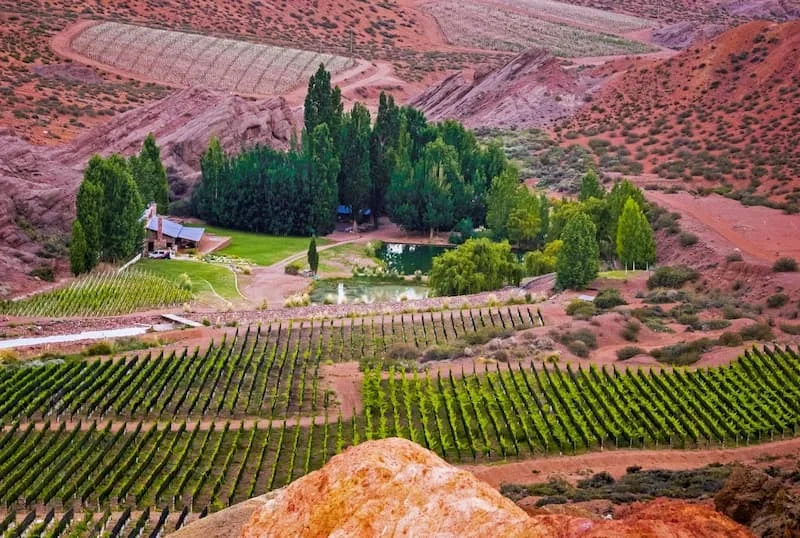
Where should people visit in Luján de Cuyo?
People come to Luján to drink wine, tourists and locals. It’s also objectively a very beautiful municipality. Also, in just the five years I’ve been here, the transformation of public spaces has been incredible.