Data Champion
Nancy Stetson
Senior Policy and Data Analyst
City of Burlington, Vermont, USA

Why did you join city government?
I knew for a long time that I wanted to work in government. What made me interested in government is how directly you are involved in solving the problem. I think that’s connected to what keeps me going on tough days. When you’re working in city government, particularly working with data, you get to answer questions that no one else has gotten the chance to look into before. You get to dig into data sets that maybe no one else has really analyzed yet. You have a lot of freedom to figure things out. You just get to find out things that maybe no one previously even knew about.
What makes you most proud when you think of your city’s use of data?
I am most proud of our open data portal. A lot of cities have collections of data online, but what I love about our open data portal is it takes the data sets that are available and turns them into dashboards that people can use to actually understand what the data is telling us. In particular, we have a ton of crime data on our open data portal, including dashboards where you can see certain trends across both the Police Department and the Fire Department. Over the past few years, I’ve also done a ton of work with our city budget. I’ve mapped out the general fund and put that in a dashboard. Whereas before, you could understand what the City was spending money on through a giant spreadsheet or online PDFs. Each year, there’d be hundreds of PDFs of all the department budgets. It was just really difficult to understand trends over time, whether we were spending more or less money on any certain category. So I did some work to pull that together and put it in one place that people can find and look up that information easily.
How did data help you solve a specific problem in your city?
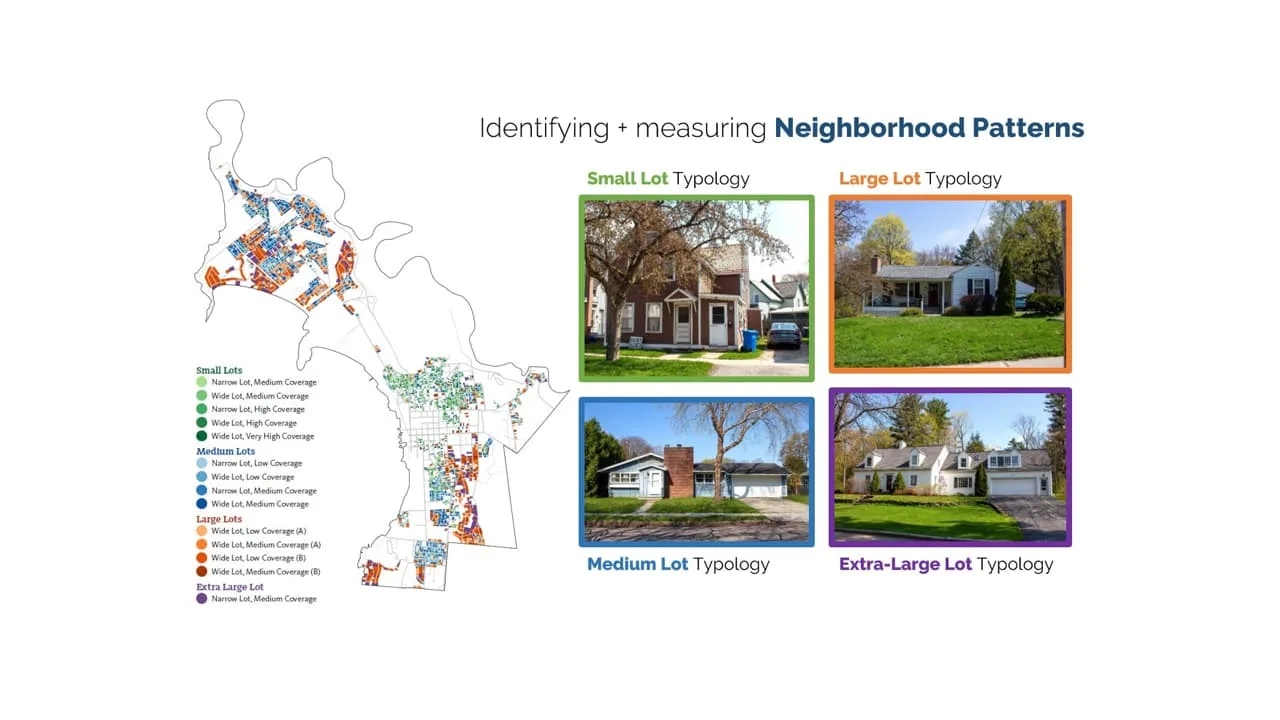
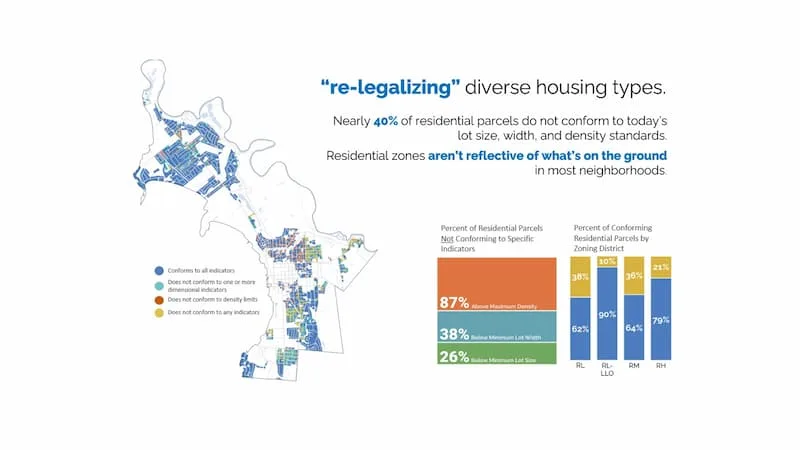
We launched a big upzoning project in 2024 and used data to make the case for why we should allow more housing within our neighborhoods. What was so interesting about this work is it was both aesthetic — looking at the neighborhoods and what fit in the neighborhoods — as well as based on tons of data about what was allowed in neighborhoods and what was there even if it wasn’t allowed. We also looked at the historic rates of growth and pulled all these different pieces together to make a clear case that both Burlington needs more housing and it’s possible to build more housing within neighborhoods without changing the character of the existing neighborhood. The City Council passed it unanimously. Since then, houses have been permitted and have been built using those new zoning rules.
What lessons have you learned that other city leaders might find helpful?
I think there’s a lot of power in making effective communication around data and particularly effective visualizations. If you’re trying to tell a story and you can tell that story, and you can distill it down into one really clear chart, it’s just very powerful compared to a long report or a lot of text. That’s something I strive to do. Recently, I was looking at some data about historic building patterns across the county. Specifically, how many homes have been built per capita in Burlington compared to the towns around us. Burlington was at the very bottom of that pile. That chart showed that even though people think of Burlington as this growing city, most of the growing is actually happening around us, not within Burlington. It’s worth striving for being able to communicate whatever point you’re trying to make as simply as possible.
What would surprise people about your city government?
What surprised me about working in Burlington was how big the city government is. Burlington is a tiny city compared to everywhere else, but the City just spans a lot of different functions. There’s so many different areas that our city government touches, from the Electric Department to Parks and Rec doing kids soccer, and that number of city staff surprised me when I started working here. What I enjoy about my position and what is nice about working in a small city is that my work gets to span a lot of those different areas, and I get to think about and work in all different subject areas as they come up.
What’s next for your work — and how do you hope to keep using data?
We want to launch a series of data briefs about Burlington. Sometimes people will say these stats out in the community that just aren’t real. We’re trying to find ways that we can be a part of the conversation and ground some of the community conversations in real data about what’s happening in Burlington because we have direct access to so many different data points. I’m excited about that. We’re also about to launch the initial work on a comprehensive plan. And so I think those two pieces will come together nicely as we work on understanding current conditions of the city through data in preparation for that comprehensive plan.
What did achieving What Works Cities Certification mean to you and your city?
Certification was a really clear recognition for a lot of behind-the-scenes work that had been happening for years. It was great to just have an outside organization see what we were doing and let us know we were on the right track, and also get some help with ways we could continue to improve. A lot of this data work goes under the radar. It’s foundational, and so it’s great to get feedback and recognition for that work.
Where should people visit in Burlington?
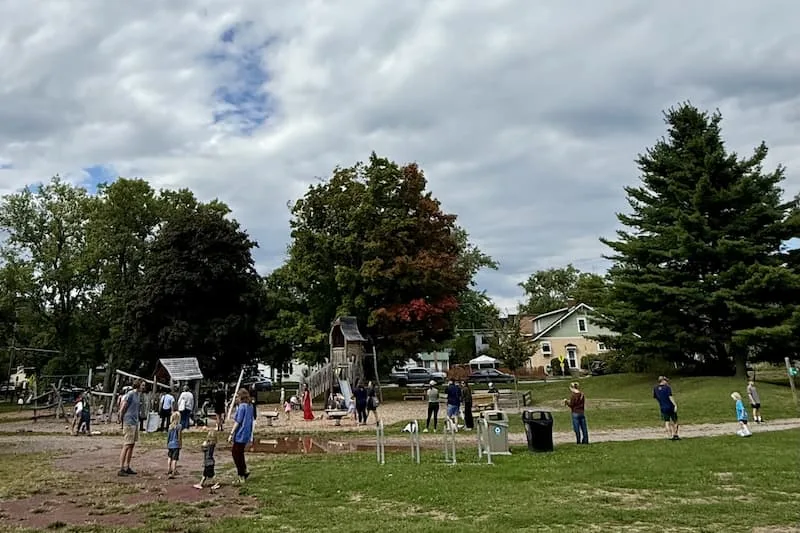
I have four kids, and so we spend a lot of time at the neighborhood park, Calahan Park. What really makes it special is that it’s a true neighborhood park. If it’s a nice day out, you walk there and see other people from the neighborhood. It’s a real meeting point. It is a big part of what makes Burlington special — this tight-knit community that we have. You can find that at Calahan Park.