Data Champion
Sabrina McLeod
Grants & Strategic Initiatives Project Manager
City of Port St. Lucie, Florida, USA
Why did you join city government? What keeps you going on tough days?
I started working for the City of Port St. Lucie as an intern during the summers between college, twice in the City Manager’s Office and once with the HR Department. I fell into city government and it ended up working out really well for me. There are times where it’s been challenging, but I always remind myself that there are always good things on the horizon. I truly love the best days, just getting to know more of the city employees and getting to do more for the residents. Even on the toughest day, it’s not boring.
What makes you most proud when you think of your city’s use of data?
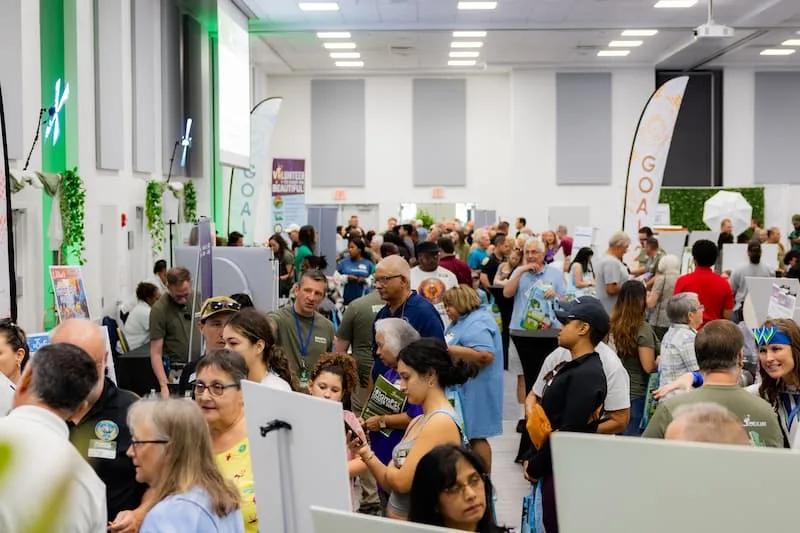
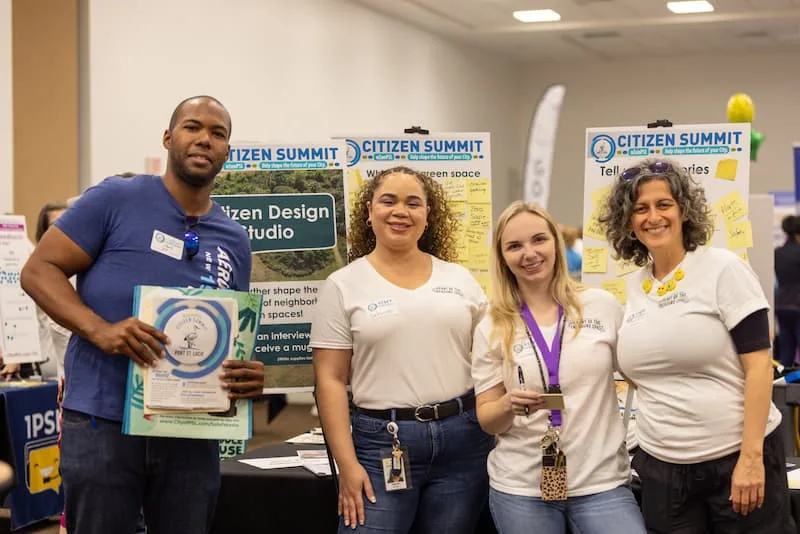
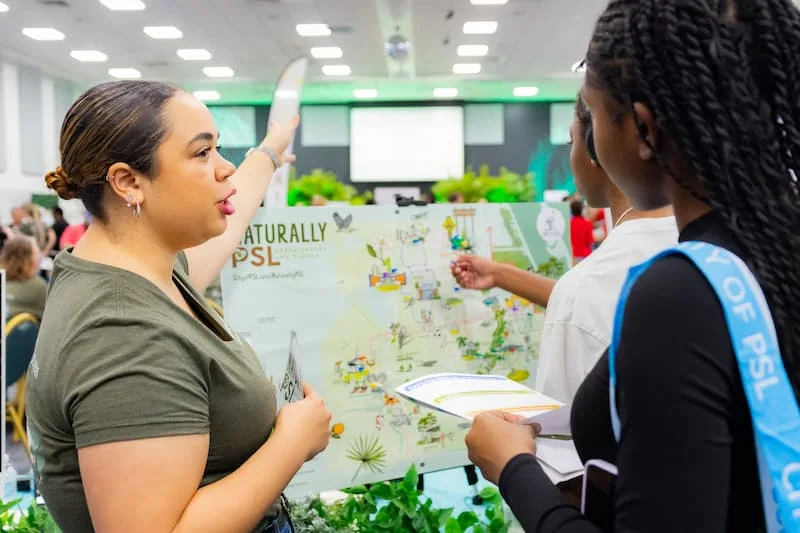
I work in the strategic initiatives team, and I think what I’m most proud of is the city’s community outreach with data. One of our core principles is engagement and being able to work with residents rather than just make decisions without their input. For example, our strategic plan is based on the Citizen Summit, an annual event at a public space where residents share their thoughts on projects in the plan directly with project managers. We also run a scientific community survey every year to get valid feedback. What I like is how we bring together both the quantitative and the qualitative data to better understand residents’ perspectives. The strategic plan is a good example of that balance, and I’m proud that this approach is starting to expand into other departments as well. As a resident, I really appreciate it. While I may have a differing viewpoint, I know the city has talked with multiple people and considered many perspectives to get to the best result. That’s something I value both as an employee and a member of the community.
How does data guide your work?
One example is our master planning efforts. For instance, the 10-year Parks and Recreation Master Plan or the recent plan for the MidFlorida Event Center. Those processes relied not just on residential surveys, but also on focus groups and community workshops, as well as benchmarking, demographics, and business data. Pulling all of that together creates a strong framework for long-term projects. It also helps avoid miscommunication or disagreements later because the plans are clearly backed by both data and community input. That makes it easier for staff and residents to support the projects.
What lessons have you learned that other city leaders might find helpful?
I always think of Nike’s “Just do it.” No one starts with all of the answers. If you’re thinking of a strategic plan, just start with conversations about goals and what residents want. For our team starting the What Works Cities Assessment was a starting point. It gave us a better framework for what we were doing and showed us what we could take a step further and improve. We also have Innovate PSL Academy which gives city employees a place to explore new ideas. It’s like a jolt of energy, and once you start, you see things begin to fall into place. Just like when we started the Citizens Summit eight years ago and saw how far it’s come, Innovate PSL is creating that same kind of momentum.
What would surprise people about your city government?
One surprise is how fast we’re growing. We’ve added about 50,000 residents in the past five years and are the sixth-largest city in Florida. Inside city government I think what surprises me is the culture here. This is the only government I’ve worked in, but when I hear from colleagues who came from other cities, they always say they like the way Port St. Lucie works—the way we hear residents, the way we treat employees. Our city isn’t perfect, but I’ve learned that not every government has this same culture. What moves us forward here is the people and when employees genuinely care, that’s what makes the city better.
What’s next for your work — and how do you hope to keep using data?
One thing we are doing is taking some of our teachings and making workshops for different departments to encourage more data use in the department. I think data is going to be used more for all of our decisions. It’s a cornerstone of how our department and our city manager want the city to move forward. For me, I hope to continue to help departments get the most out of their data and continue to improve our city.
What did achieving What Works Cities Certification mean to you and your city?
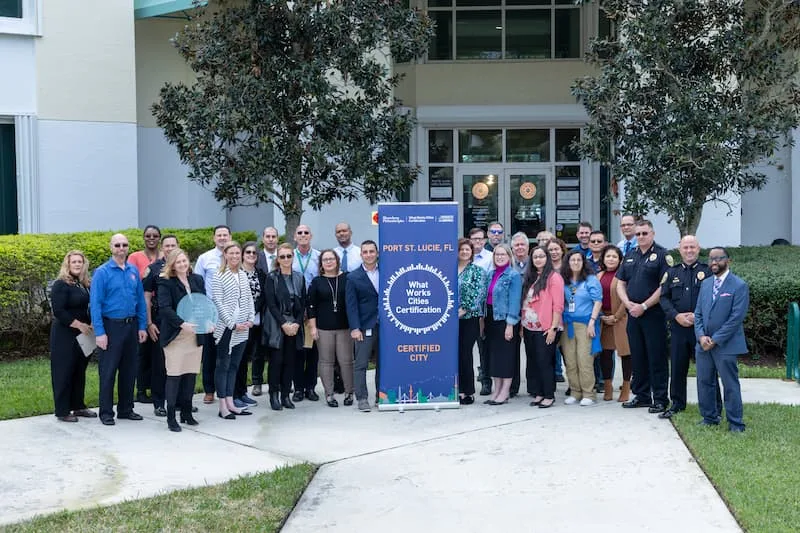
It was a win for the team. Certification isn’t something you achieve as an individual or even as a single department, it takes multiple departments working together, as well as support from the council. Our city is growing; we still have a small-town feel, but we’re expanding at a pace that requires big-city processes, including how we manage our data. Certification helped us move forward, improving our policies, dashboards and data sources. Departments are constantly finding ways to improve, and Certification really pushed us further into the future than we expected. I can’t stress enough that none of this was done by me alone—it was truly a team effort. The city’s progress comes from great employees coming together.
Where should people visit in Port St. Lucie?
They should go to the Port. It is a new park that sets a standard for what we want our parks to be like in the future. What I love about it is that it’s a high-performing public space that does more than one thing. It’s a park, but it also has an event lawn for small concerts, soon-to-come restaurants to support local business, and a boardwalk along the river for walking or running. It’s a gorgeous, multifunctional space that shows the vision for Port St. Lucie.