Three years since joining Bloomberg Philanthropies What Works Cities, what inspires me most is the vibrant, multinational community we’re building together. Every visit with city leaders — whether in Bogotá, Colombia; Calgary, Canada; or Savannah, Georgia, — leaves me energized by the commitment to data-driven government. This community stands united in our belief that by using data effectively, we can enrich the resident experience.
100+ Cities and Counting
This shared energy is building momentum behind our movement and accelerating its growth. Across North, Central and South America, more than 100 cities have now achieved Bloomberg Philanthropies What Works Cities Certification, meaning that they are among the very best when it comes to using data to make local government work better for residents. The list of Certified cities spans nine countries with nearly 1 billion people and includes cities with populations as large as 6 million and as small as 40,000. Our community also includes more than 200 additional cities where leaders are working hard to bolster data practices in hopes of improving their city operations and management as well as achieving Certification.
As WWC seeks to grow our community and strengthen global data practices and decision making, we asked for ideas on how we can best serve you. You shared that What Works Cities needed an easier starting point. The initial 43-question Assessment we required cities to submit regarding their existing data practices could be intimidating for city staff who are already spread thin.
We heard you.
Introducing the Data Snapshot
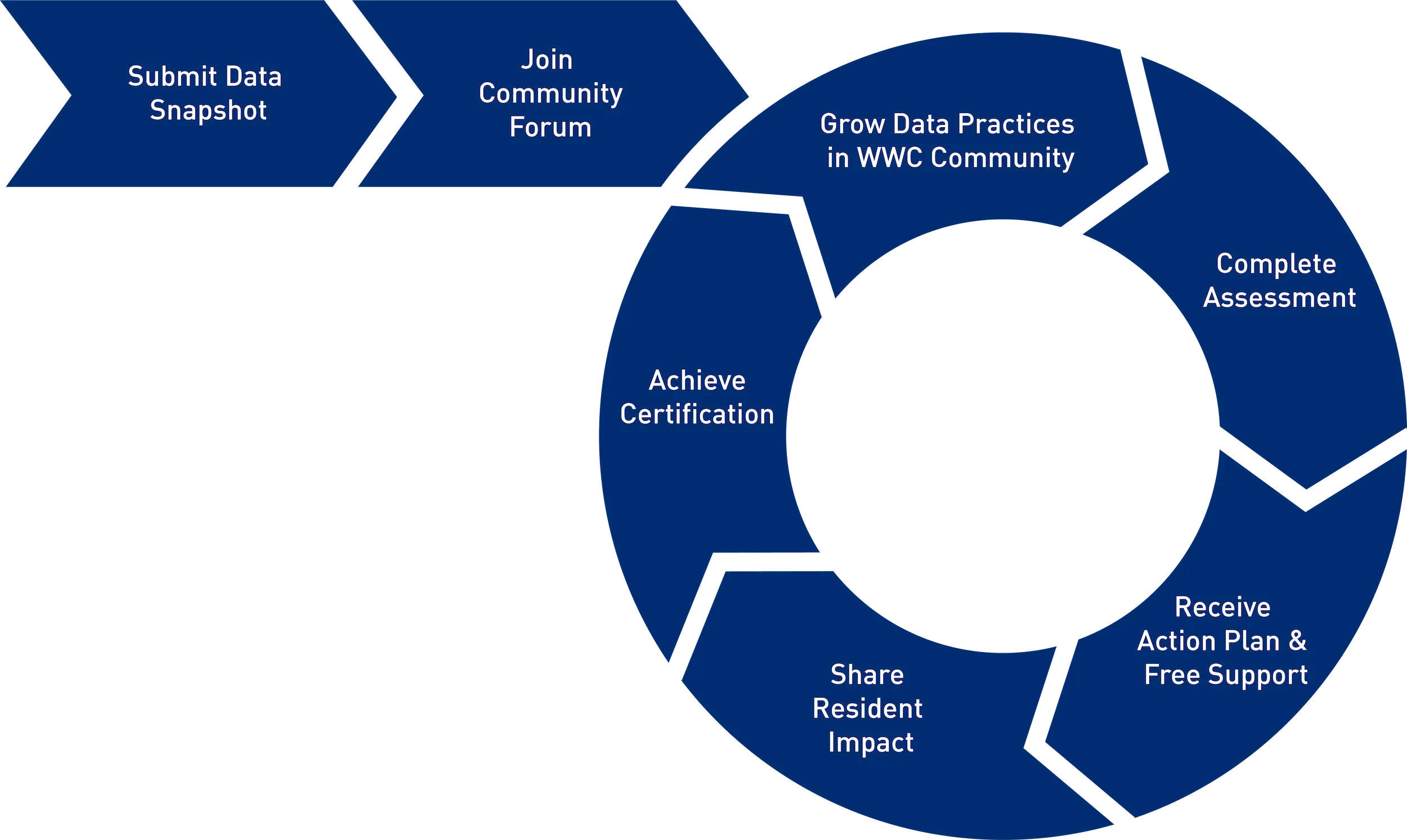
There is now a simpler, more accessible way for cities to express interest in joining the What Works Cities community and getting on a path toward Certification. Our streamlined initial assessment, called the Data Snapshot, asks just eight multiple choice questions that can be completed in 30 minutes or less.

The Data Snapshot is for any city new to the What Works Cities community, whether they’re advanced at using data in daily operations or just starting to think about how data can benefit their city. After completing the Data Snapshot, cities obtain valuable insights into their current data practices and gain access to tailored, free support to help them create a plan to build their data capacity and move toward Certification.
Your City. Your Outcomes.
There’s one more big change to Certification — and it’s important whether your city is new to the program or already Certified and looking to level-up from Silver to Gold to Platinum.
Starting this fall, there will be new flexibility in how cities demonstrate that residents benefit from improved data practices. Previously, the Resident Outcome Framework in the What Works Cities Standard required cities to meet specific benchmarks related to broadband access, clean air or other priorities aligned with the U.N.’s Sustainable Development Goals. We heard from you that these categories could be restrictive and sometimes hard to measure or outside your control as city leaders.
In response to your feedback, cities can share resident outcomes related to a local priority of their choice. To achieve Certification, cities will be asked to share how data helped them identify problems and develop solutions, as well as define success and track progress. Gold and Platinum cities will share how they shifted dollars to evidence-based solutions and/or must demonstrate impact that is leading to population-level results. For example, a key outcome could be related to increasing tree canopy coverage, improving children’s access to playgrounds, closing health care disparities, or other critical issues. What matters — and what cities will be evaluated on — is that they are using data and evidence to meaningfully improve the lives and well-being of their residents. That’s what this work is ultimately about.
The new Data Snapshot and changes to the Resident Outcome Framework are part of our ongoing effort to to support you as the WWC community of leaders who are seeking to redefine how you serve residents. Additionally, a committee of leading city data experts conducted a review and update of Certification criteria. Proposed changes were put out to public comment, revised based on feedback and have been adopted for the next Certification cycle. This process is important to continually raise the bar for data-driven governance.
What’s Next
Any city with more than 30,000 people from North, Central or South America is eligible to take the Data Snapshot. Once you complete it, our team provides feedback and your city plugs into free support from What Works Cities, including learning opportunities and a resource library. You’ll also join an international network of dedicated city leaders committed to sharing and learning together. Our team will also be hosting webinars to discuss the updated Resident Outcome Framework.
As city leaders navigate emerging technology and AI, a changing climate and complex challenges, it’s important that you have a foundation you can trust — one that’s built on data, collaboration and shared purpose.
Join us by taking the Data Snapshot today.